
Full Service Catering
Full Service Catering for Large Events
Full service catering involves more than preparing and delivering food. It includes the planning, coordination, staffing, and on-site execution required to support an entire event from start to finish.
For large events, this level of service ensures that food, timing, logistics, and guest experience are handled in a coordinated and reliable way.
What Full Service Catering Actually Includes
Full service catering is designed to support the full scope of an event, not just the meal.
This typically includes:
- Menu planning based on the event type and guest count
- Preparation and service of food
- Professional staffing for setup, service, and breakdown
- Coordination with event timelines and venue requirements
- On-site management during the event
Rather than operating as a drop-off or limited service, full-service catering supports the entire flow of the event as it relates to food and service.
Off-Premise Catering for Venues and Private Locations
Off-premise catering refers to catering services provided at locations that do not have an in-house food service operation.
This includes:
- Event venues without dedicated kitchens
- Outdoor locations and private properties
- Corporate facilities and event spaces
Off-premise catering requires the ability to transport, prepare, and serve food in a wide range of environments. It also requires flexibility to adapt to different layouts, equipment availability, and logistical constraints.
Catering for Events with 200–5000 Guests
Full service catering is often most valuable for events with larger guest counts, where coordination and scale become more complex.
Typical event sizes include:
- Large corporate functions
- Weddings with high guest counts
- Fundraisers and banquets
- Community or organizational events
At this scale, food service must be organized to maintain quality, timing, and consistency across a large number of guests.
What’s Included in Full-Service Catering
Menus are developed based on the type of event, guest preferences, and service style. This can include buffet service, plated meals, or custom menu options.
Staffing & Service
Staffing includes the team responsible for food preparation, service, and guest interaction during the event. This ensures that service runs smoothly and consistently.
Setup & Breakdown
Full-service catering includes preparing the service area before the event and restoring the space afterward. This may involve equipment setup, food stations, and cleanup.
Rentals & Coordination
Catering services often include coordination of rentals such as tables, linens, china, and service equipment, depending on the event’s needs and venue setup.
On-Site Execution
Events Supported by Full-Service Catering
Full-service catering is commonly used for events that require coordination, scale, and a structured service approach.
Corporate Events
Weddings (Large-Scale)
Fundraisers & Banquets
Outdoor Events & Venue-Based Events
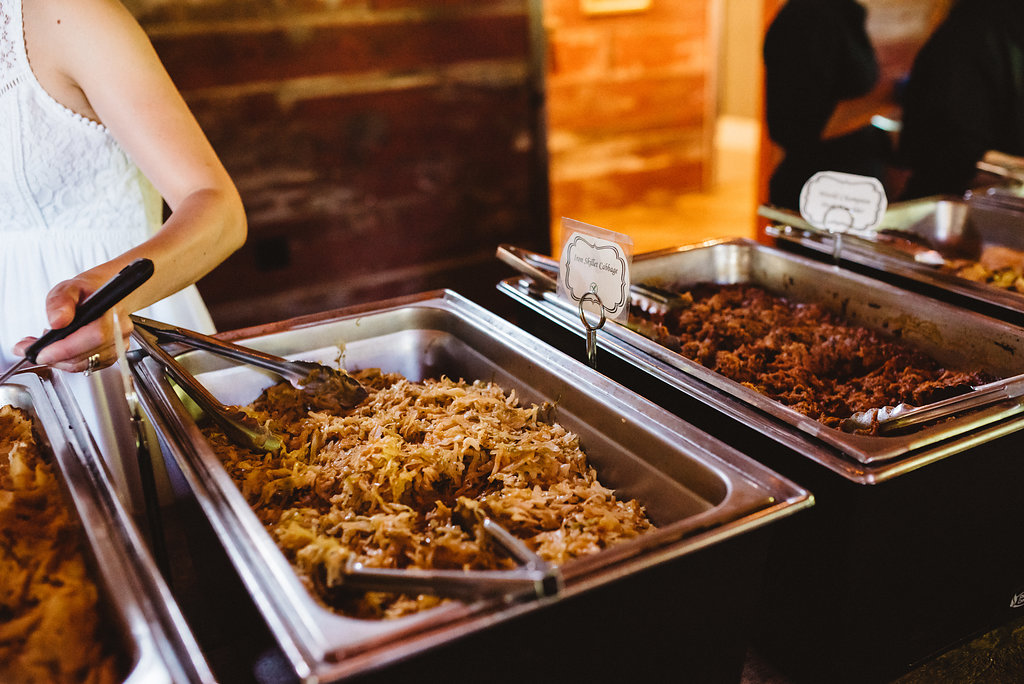

Coordinating Catering for Complex Events
Large events often involve multiple moving parts, including timelines, vendors, and venue constraints.
Full-service catering supports:
- Coordination with event timelines
- Alignment with venue requirements
- Integration with other vendors
- Management of service flow and guest experience
This level of coordination helps reduce uncertainty and ensures that food service aligns with the overall structure of the event.

Catering at Local Venues and Private Locations
Full service catering is commonly provided at a range of venues and event spaces throughout the area.
This includes venues such as:
- The Landing
- Schlitz Audubon
- Rustic Manor
- The Fitzgerald
- Riviera Ballroom
Each venue has its own layout, requirements, and logistics, which must be accounted for during planning and execution.

Full-Service Catering in Milwaukee and Surrounding Areas
Full service catering in Southeastern Wisconsin is available throughout the region:
Events are typically served within a defined service radius, depending on location, logistics, and event requirements.

When Full Service Catering Makes Sense
Full service catering is most appropriate for events that involve:
- Larger guest counts
- Multiple vendors or moving parts
- Venues without in-house catering
- Structured timelines or programming
- A need for coordinated setup, service, and breakdown
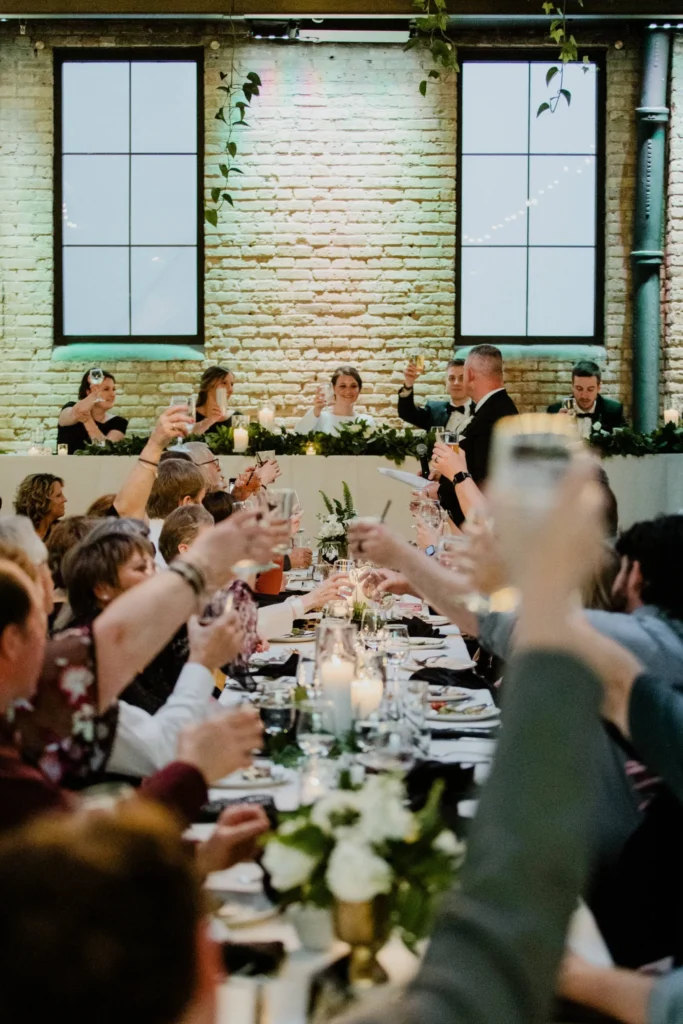
Explore Catering Options for Your Event
Each of these areas provides more detail based on event type, scale, and service needs.
Full-Service Catering FAQs
What does full-service catering include?
Full-service catering includes menu planning, food preparation, staffing, setup, service, coordination, and breakdown. It is designed to support the full execution of an event rather than just delivering food.
What is off-premise catering?
Off-premise catering refers to providing catering services at locations without an in-house kitchen or food service operation. This includes event venues, outdoor spaces, and private properties.
What size events are best suited for full-service catering?
Full-service catering is typically best suited for larger events, often with guest counts ranging from 200 to 500 people, where coordination, staffing, and logistics are required.
Do you provide staffing and rentals for events?
Yes, full-service catering can include staffing for setup and service, as well as coordination of rentals such as tables, linens, china, and service equipment depending on the event needs.
Can you cater events at venues without kitchens?
Yes, off-premise catering is designed to support venues and locations without dedicated kitchen facilities by adapting setup and service to the environment.
Do you service Southeastern Wisconsin?
Yes. We provide full service catering in Southeastern Wisconsin for weddings, corporate events, fundraisers, private parties, nonprofit events, and other special occasions. Our team serves venues throughout the region, with service availability based on event location and logistical requirements. Contact us to confirm whether your venue is within our service area and to discuss your event needs.